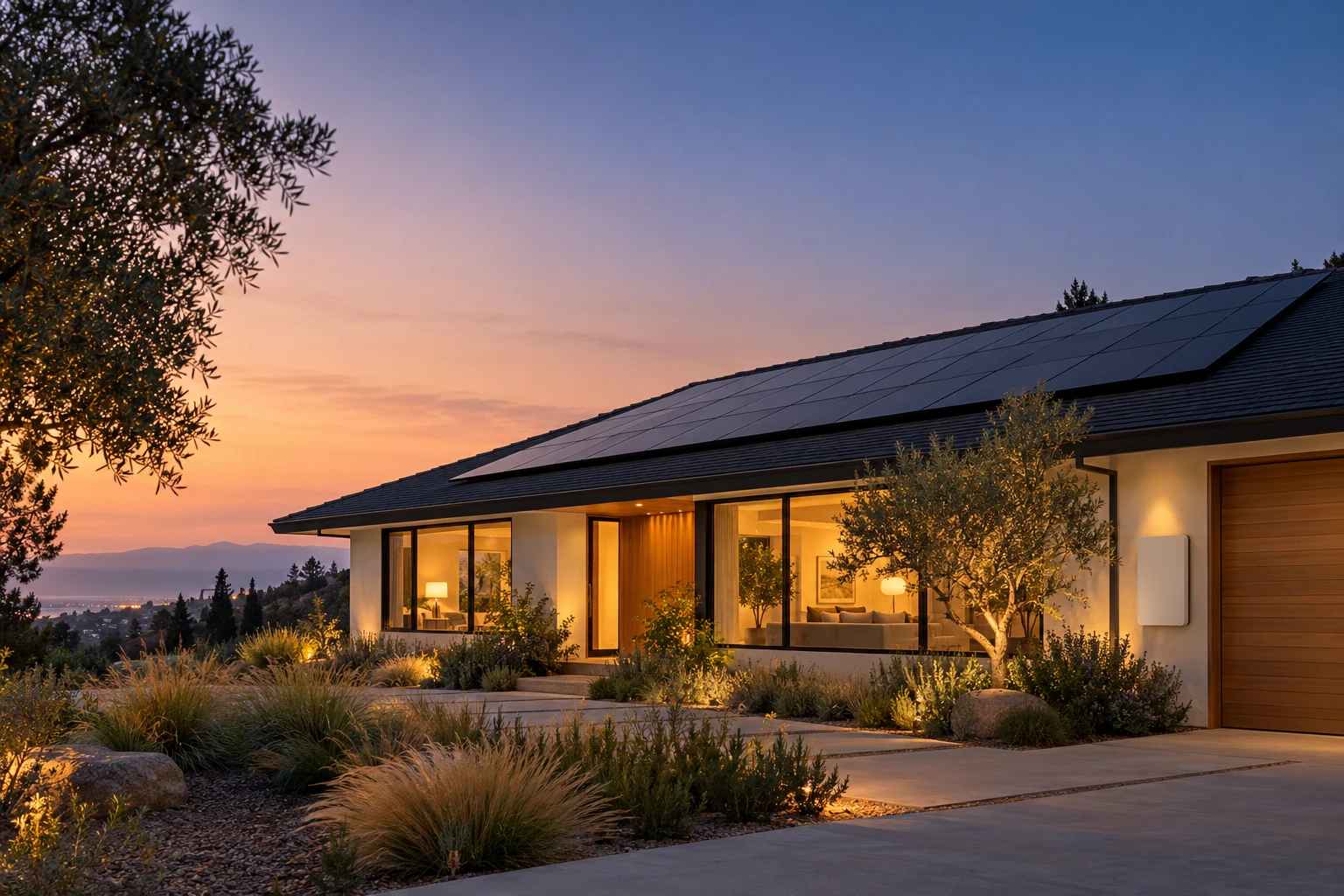

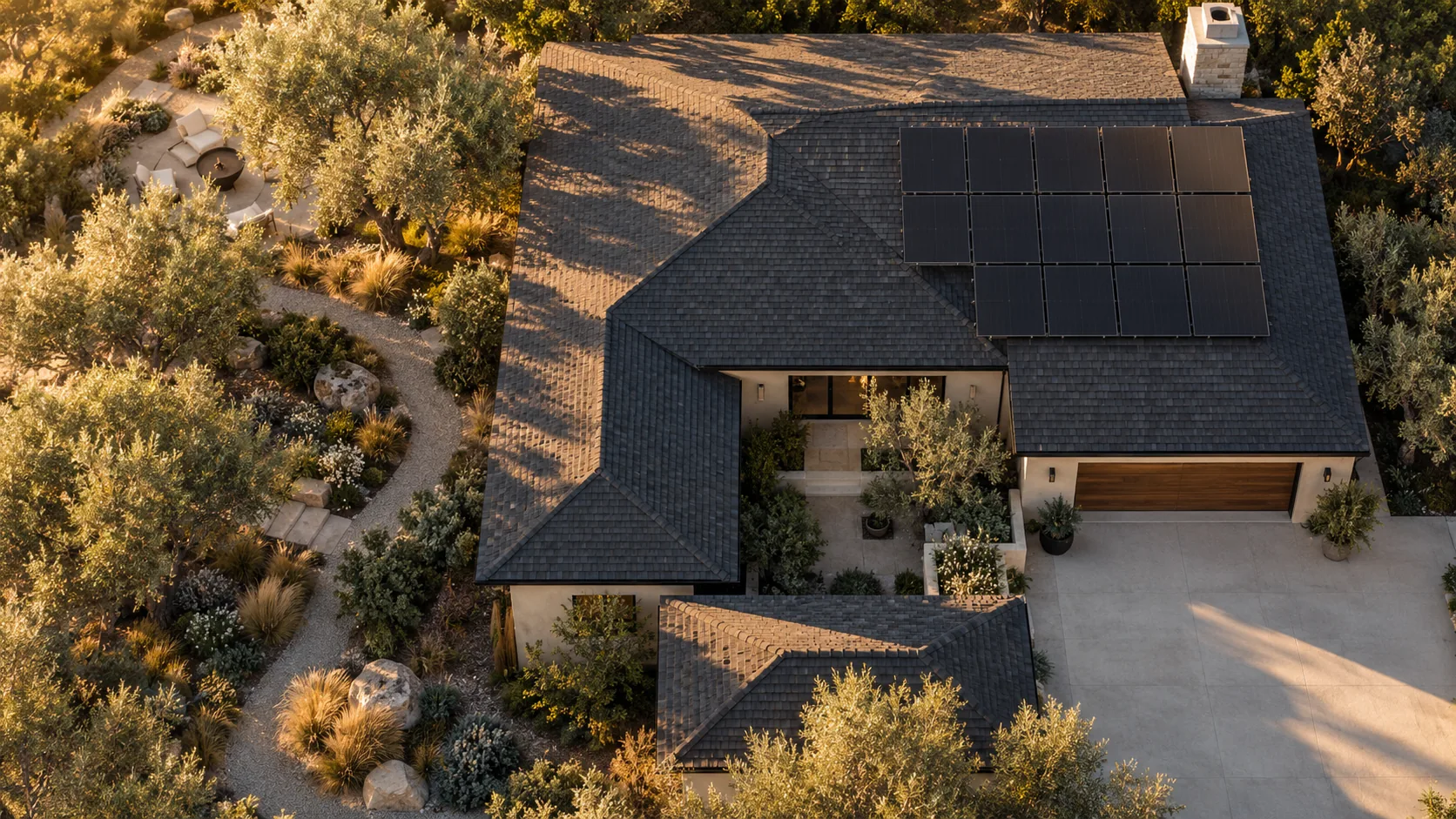
A year in daylight
7,200 kWh / year
JanJunDec
A year of possibility.
See what a starting system could generate, with the assumptions in plain view.
Your roof, your routine, your budget. A solar setup that starts with you.
A year in daylight
7,200 kWh / year
See what a starting system could generate, with the assumptions in plain view.
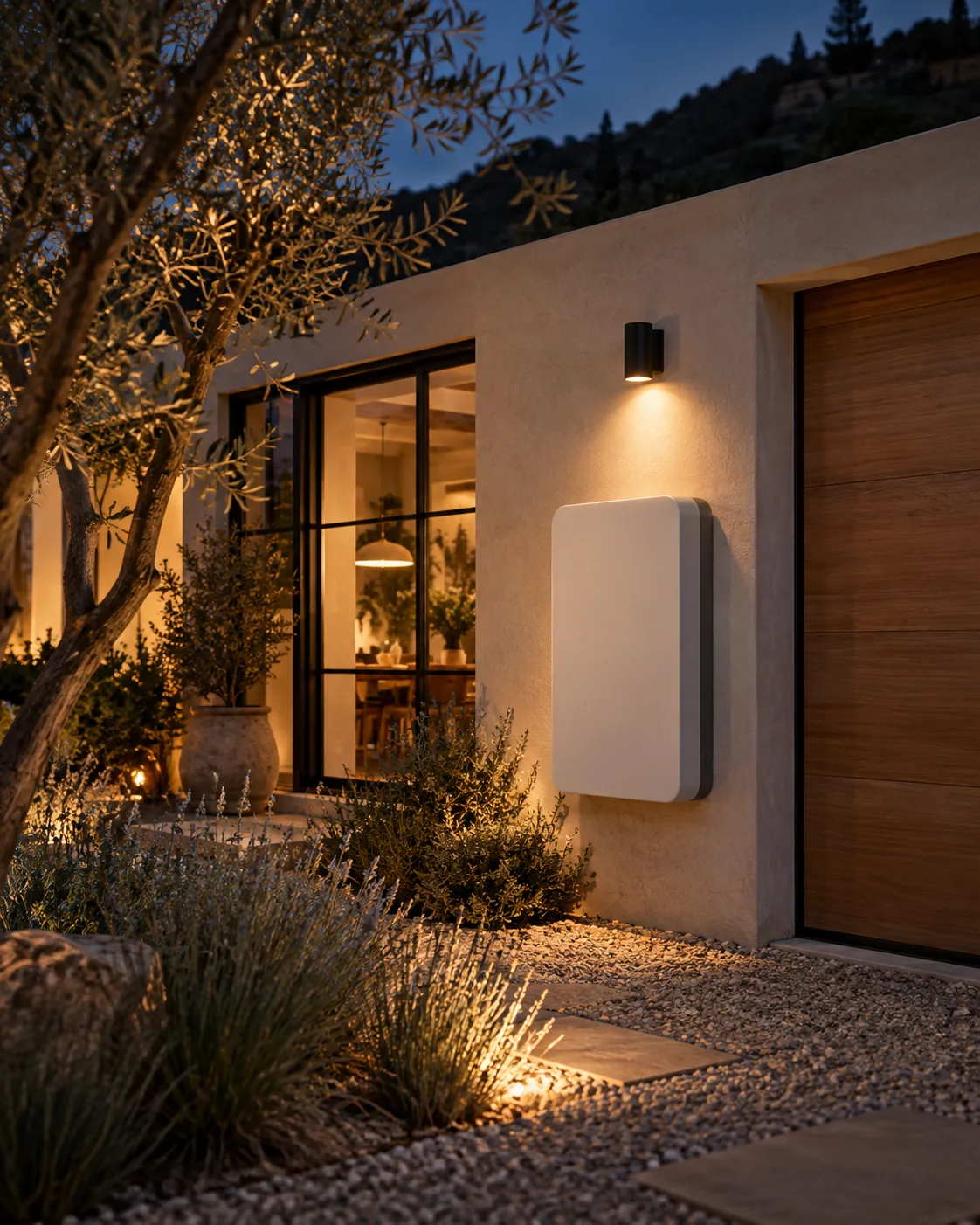
Stored sunshine
Add a battery to use more of your solar after sunset, and explore backup for your essentials.
No fine-print surprises
Compare paying up front with financing, before sharing your details.
Sunshine, meet spreadsheet
Solar should make sense on your roof and on paper. Move the slider to see how your bill changes the picture.
Potential net savings over 25 years
$29,400
The curve starts with your investment. Savings cross zero at payback.
Illustrative model only. Assumes $0.22/kWh electricity, 1,500 kWh annual output per kW, $3/W installed, 2% annual rate growth, 0.5% annual panel degradation and $150/year maintenance. First-year savings use system output, capped at 90% of the starting bill. No incentives, export credits, fixed utility charges, equipment replacement or battery savings are included. Roof and tariff unverified.
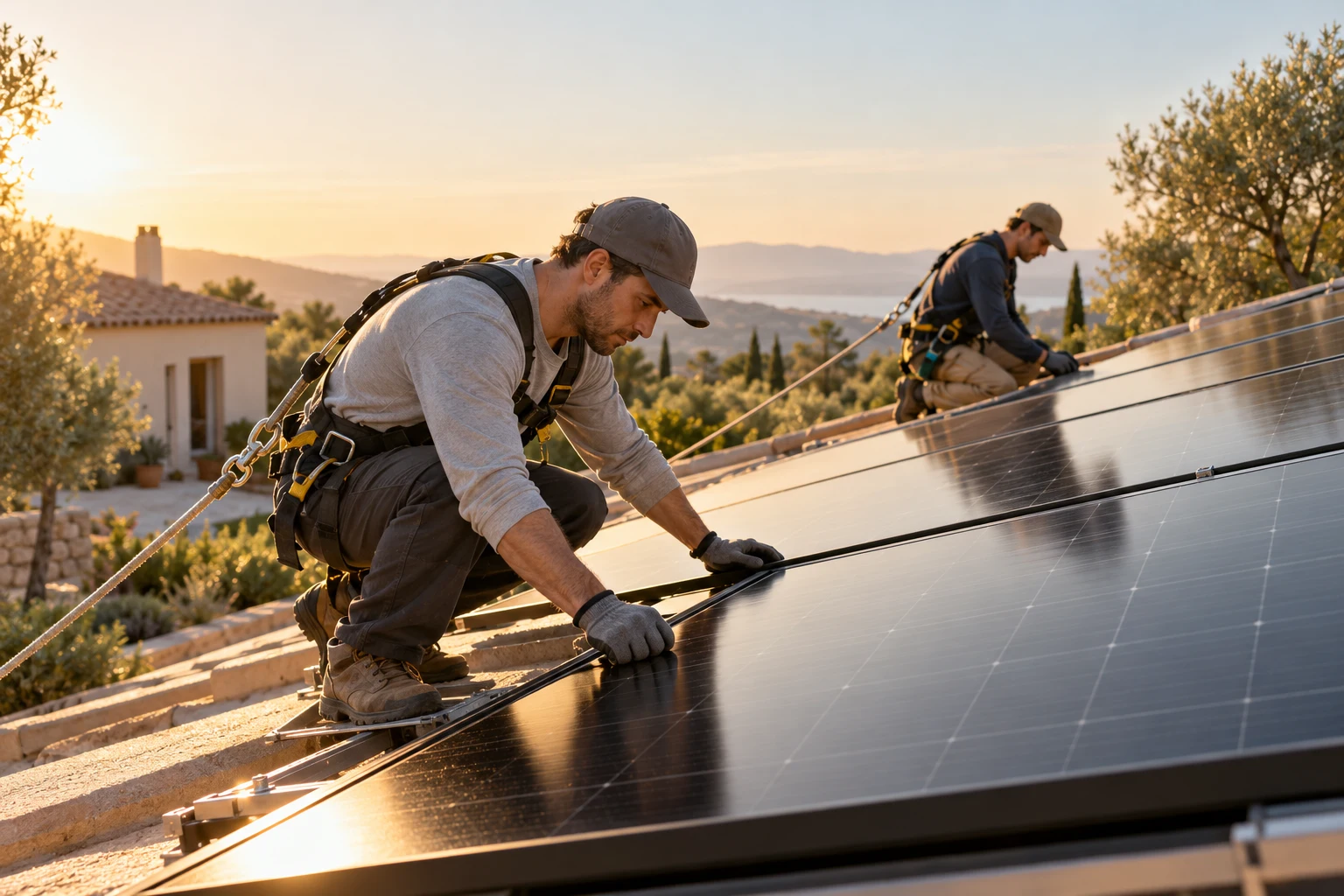
A big decision deserves a little breathing room. Here is what happens, and when.
Tell us a little about your home and electricity bill. Explore savings without a sales call.
Your curiosity, no commitment
Choose your system and battery. A site survey checks the roof and confirms your final quote.
Nothing hidden, nothing rushed
Understand each milestone: design, permits, installation and utility approval.
Every next step, in view
The ones homeowners ask first, answered plainly.
Explore all questionsIt depends on your roof, electricity use, local rates and installation cost. The estimator gives you a starting point. A roof survey and a review of your utility tariff are needed before a final decision.
No. You can explore an illustrative system price, projected savings and financing before entering any contact details. You choose when to take the next step.
No. A battery can store daytime energy for evening use and may provide backup when paired with the right equipment. Whether it makes sense depends on your tariff, usage and backup needs.
Standard grid-connected solar normally switches off during an outage. Backup requires a compatible battery, inverter and isolation equipment. Your final design should specify exactly which circuits it can support.
Shade, roof condition and usable space all matter. If the numbers or the roof do not work, the right answer may be to wait or explore another option. A site survey checks this before installation.
Your next chapter starts here
Your home. Your numbers. Your call.