Alerts nobody triages
Your backend raises hundreds of OCPP events a day. Someone still has to find the five that matter.
Salve watches every port on your network, diagnoses faults and fixes them remotely, day and night. Drivers keep charging. Your team keeps sleeping.
Works with any OCPP chargerLive in days, not monthsSOC 2 Type II
Built on the open standards of the industry, whatever hardware your network runs.
Most faults don’t need a technician. They need someone awake at the right moment.
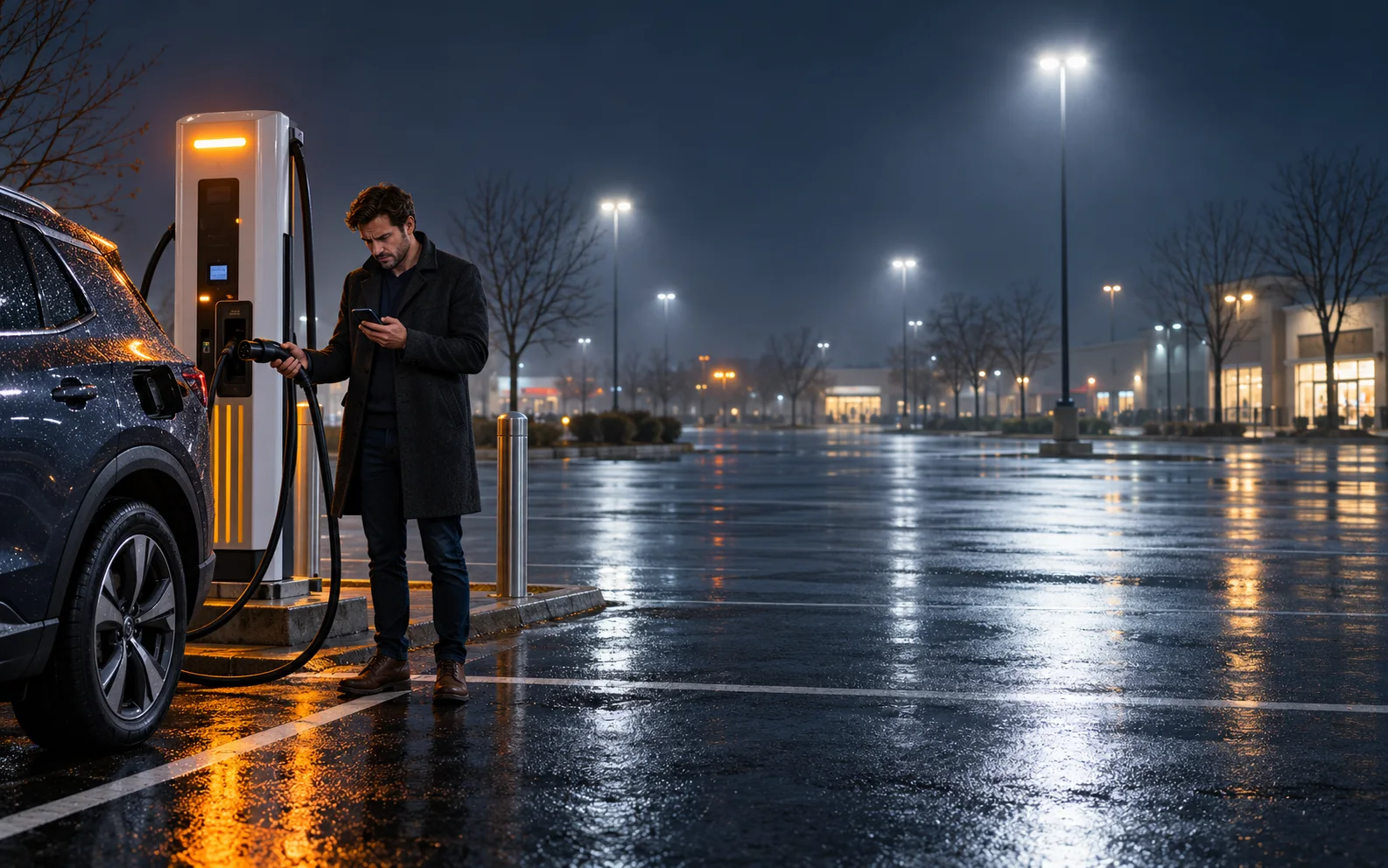
Your backend raises hundreds of OCPP events a day. Someone still has to find the five that matter.
A remote reset or unlock would usually do. A technician drives out anyway, at $250 a visit.
The stranded driver calls. On-call picks up, opens three tools, then calls back.
NEVI funding expects 97% uptime per port. Every lost hour shows up in your quarterly report.
Monitoring, diagnosis, remote fixes, field service and driver support work from the same live data.
The status of every port, uptime by site, and NEVI-ready exports for your quarterly reports.
Vendor error codes translated into causes and next actions.
Resets, unlocks, firmware. Every rule runs automatically, waits for approval, or just alerts.
When a fault persists, the ticket reaches your field team with the diagnosis and the likely part.
An assistant answers by phone and text, finds the charger and restarts the session.
How it works
The same incident, replayed step by step. Charger US*ARC*E0417, port 2, at 2:14 AM last night.
1m 55s
From fault reported to charger available. No ticket, no truck roll, no on-call page.
2:14:07 AM+0s
The charger reports a fault. Salve ties it to the site, the port and its full history.
2:14:09 AM+2s
The vendor error code is matched against known cases. Likely cause: a stuck connector latch.
2:14:31 AM+24s
The rule you set for this case runs: a remote unlock, then a soft reset.
2:16:02 AM+1m 55s
Salve checks the charger reports Available, runs a test session and closes the incident.
If the fault persists, a ticket goes to your field team with the diagnosis and the charger’s history. The driver gets a text.
Every port reports its state in real time. A fault lights up on the map, gets diagnosed and fixed remotely, and the charger goes back to Available.
South Station Garage, Boston
US*ARC*E0417 · port 2
I-5 Travel Center, California
US*ARC*E0152 · port 1
Fulton Market Garage, Chicago
US*ARC*E0233 · port 1
1,612
ports monitored
38
sites in 21 states
47
incidents resolved today
1m 48s
median time to resolve
Networks across the US run their chargers on Salve, day and night.

“Nobody gets up at 3 AM for a stuck latch anymore. We read the night report over coffee.”
71%
of incidents fixed without a truck roll
You pay for the ports we watch. Not for seats, not for alert volume.
To watch your first sites.
Included
To automate the night shift.
Everything in Essentials, plus:
For multi-state networks and public agencies.
Everything in Operations, plus:
Example · 200 ports on Operations = $2,000 / month
Prices exclude sales tax. Updates, hosting and email support included.
Another technical question? We answer within one business day.
Ask your questionAny charger that speaks OCPP 1.6J or 2.0.1, from any hardware vendor. Connecting one is a single change of its backend URL.
No. Salve can sit in front of your current CSMS and relay every OCPP message to it, or replace it entirely.
The ones you choose. Every rule is set to run automatically, wait for approval, or simply alert your team.
The ticket goes to your field team or contractor by email or API, with the diagnosis, the charger’s history and the likely part.
In AWS us-east-2 (Ohio) with a replica in us-west-2 (Oregon). Salve is SOC 2 Type II audited, and data never leaves the United States.
Your first site is connected within days. We tune the automation rules with your team during the first month.
We replay a week of your OCPP logs and show you what Salve would have fixed on its own.